DISCOVER KODUNGALLUR
Heritage, sacred places, beaches & backwaters
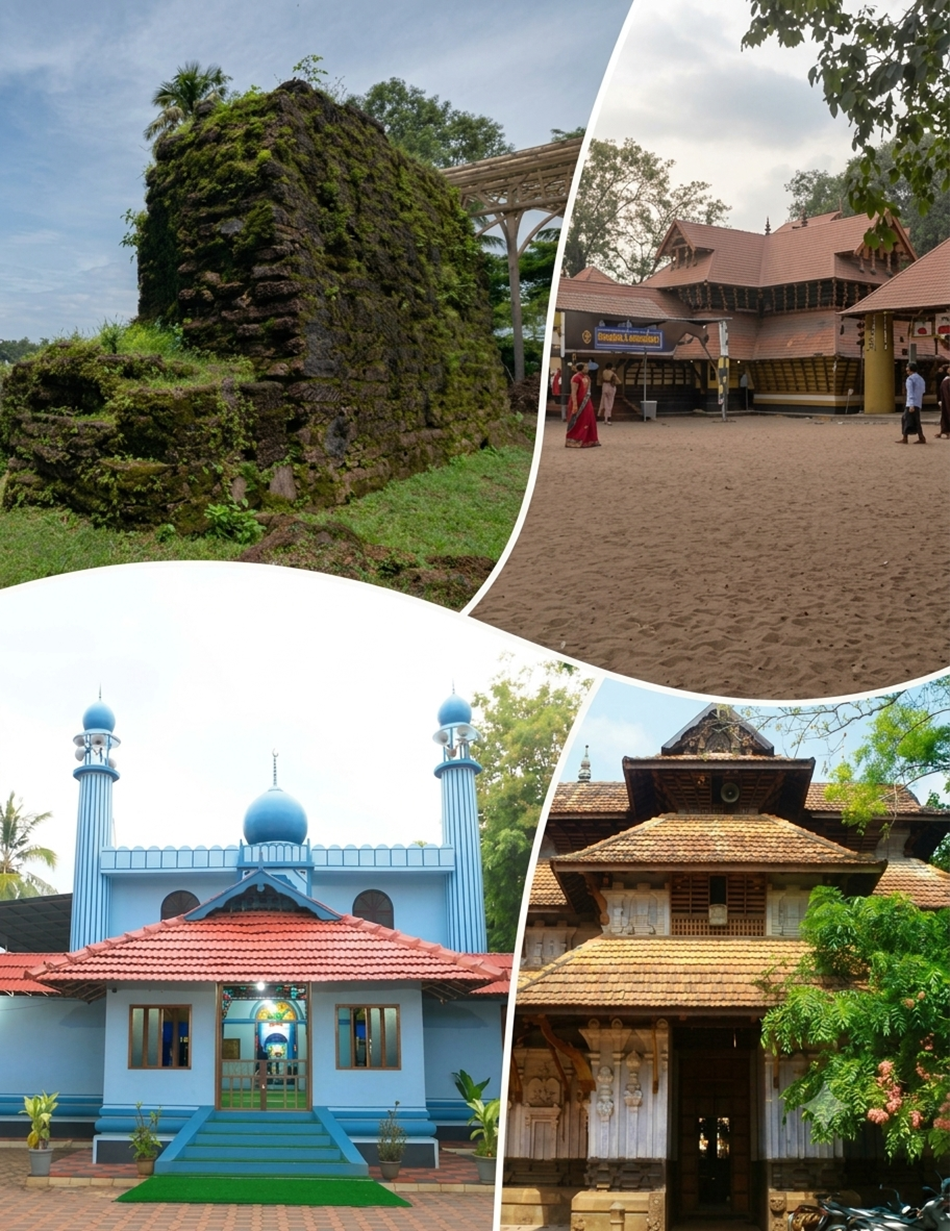
The small country town of Kodungallur is situated 35 kilometres south of Thrissur. Kodungallur situated on the west coast, was once a great port during the time of the Chera rulers of Tamil Nadu. It was known to the Greeks as Muziris and is a place immersed in rich history.
Kodungallur or Kodungalloor, surrounded by backwaters and the sea was also known as Cranganore and has an illustrious past, to tell. The ancient port here at Kodungallur was a busy port in the first century BC and was the gateway for various religious faiths like Christianity, Judaism, Islam and others. Cargo vessels from West Asia, Mediterranean and East Africa used to drop anchor at the Port of Muziris. St.Thomas, the apostle of Jesus Christ is believed to have set foot in Kerala through the Muziris port and so did the Islamic missionaries. It is here that India’s first church, St. Thomas Church and the first mosque, Cheraman Juma Masjid, are located.
Since the 15th century, the region began to come under the influence of foreign powers, starting with the Portuguese, followed by the Dutch and the British.
Today, Kodungallur and the surrounding regions have various representations from a past that eventually had a say in the socio-cultural and religious aspects of the region. You could visit some of the locations in Kodungallur that still bear symbols of a historic Kodungallur.
1. Cheraman Juma Masjid & Islamic Heritage Museum
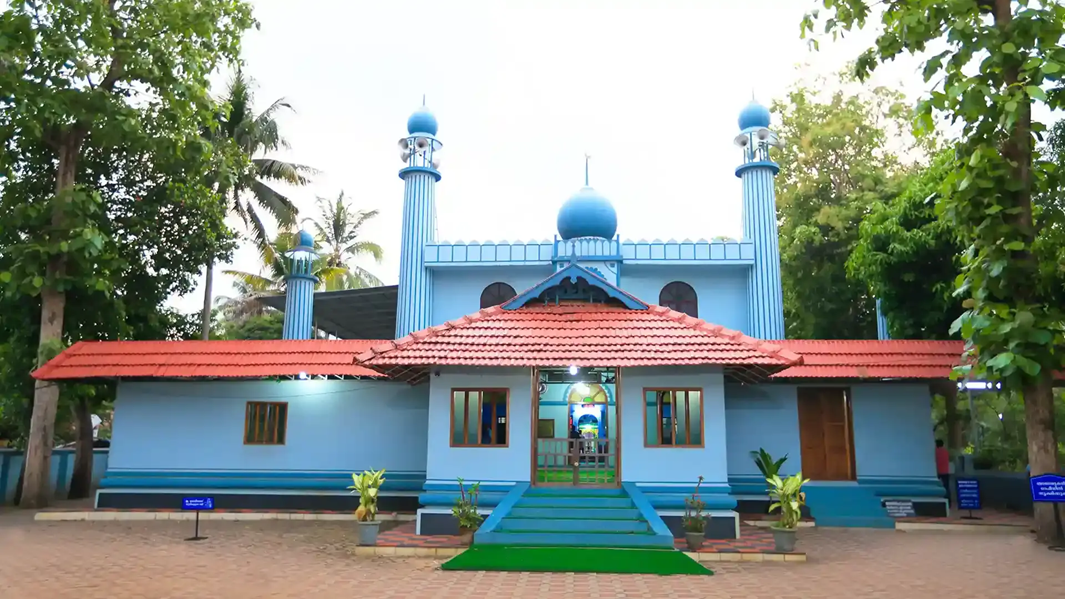
One of the region’s most important heritage landmarks. The mosque is widely recognised as India’s first mosque in local and tourism histories, with traditions tracing its origin to 629 CE. The nearby museum helps visitors explore the story of Islam in Kerala.
The Cheraman Juma Masjid, located approximately 2 km from Kodungalloor town in Kerala, is recognized as the first mosque built in India, dating back to 629 CE. Established by Malik Ibn Dinar during the lifetime of the Prophet Muhammad, it holds the distinction of being the second mosque globally to commence Juma prayers.
The mosque's architecture is notable for its blend of traditional Kerala and Middle Eastern styles, featuring a facade resembling a Hindu temple. Despite undergoing several renovations over the centuries, key elements like the sanctum sanctorum, wooden steps, and ceiling have been preserved, maintaining its historical essence. A unique feature of the mosque is an ancient oil lamp, believed to have been burning continuously since its inception.
As part of the Muziris Heritage Project, the mosque complex now includes Kerala's first Islamic Heritage Museum, which showcases the history of Islam in the state through visual media, murals, and paintings, including the story of Cheraman Perumal.
2. Kodungallur Sree Kurumba Bhagavathy Temple
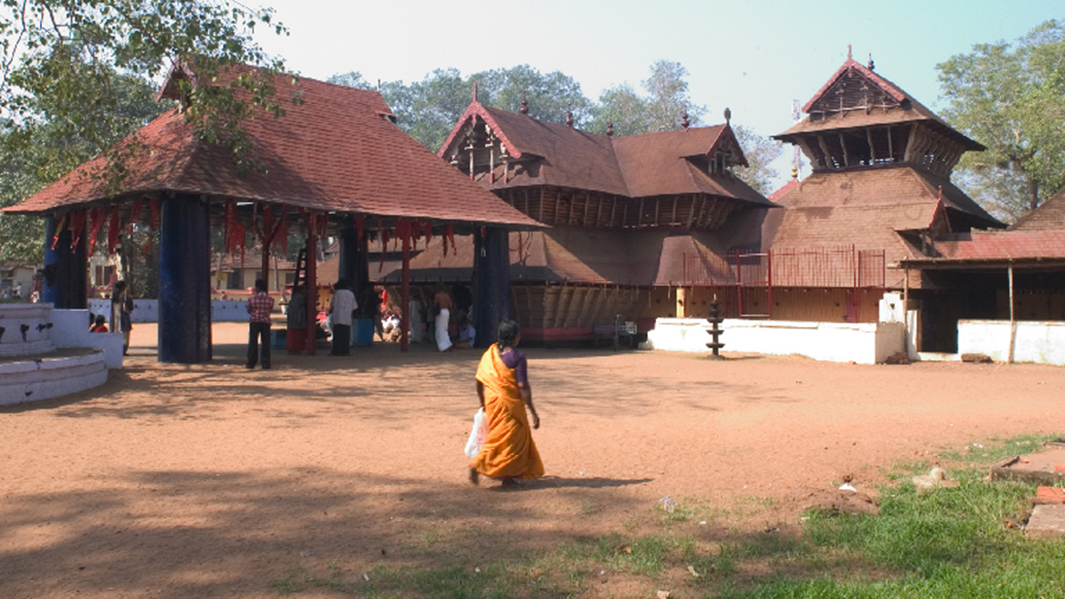
A prominent temple dedicated to Goddess Bhadrakali and one of Kodungallur’s best-known cultural landmarks. The temple is especially associated with its distinctive traditions and annual Bharani festival. Kodungallur Bhagavathy Temple, also known as Kurumbakavu Bhagavathy Temple is a major shrine of Goddess Kali in Thrissur district. Located 1.5 kms southeast of Kodungallur bus stand, this temple is renowned as one of the Shaktipeedhams [powerful seats] of the Goddess in Kerala. It is believed that the magnificent power of the temple is conceived in the five Chakras consecrated by Adi Shankaracharya. The devotees believe that the rituals are conducted under the instructions of the Goddess.
The temple is considered the second abode of Kannaki, an incarnation of Goddess Kali. It is supposed that the idol of Kannaki was discovered 1800 years back, by the Chera king, Cheran Chenkottuvan. The temple, situated in 10 acres of land, is built in typical Kerala architectural style and features many secret paths and chambers.
The temple enjoys an important place in the itinerary of devotees visiting Kerala, especially on Tuesdays, Fridays and during the Sabarimala season. Bharani utsavam or Kaavutheendal which starts on the Bharani asterism in the Malayalam month of Meenam [March-April] is the most famous festival celebrated at the temple. In olden times, the customary practice of animal sacrifices was part of the festival but later it was prohibited. But the devotees still sing lewd songs and drink liquor as they go from their village to the temple as part of an ancient, quaint and almost forgotten ceremony.
3. Kottappuram Fort
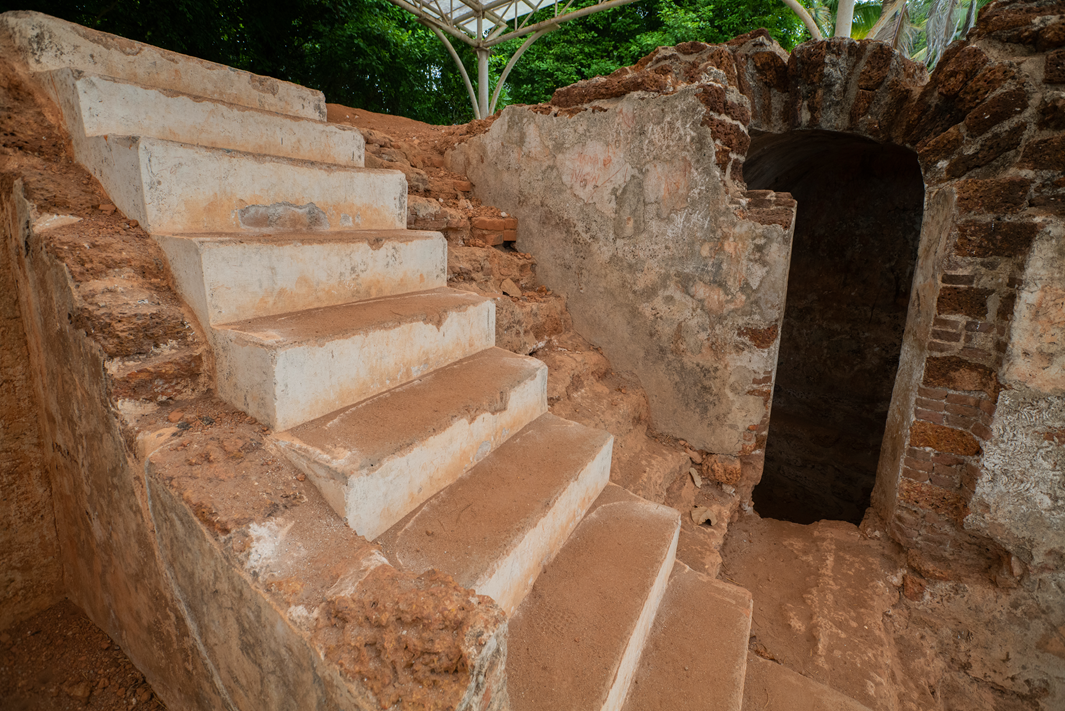
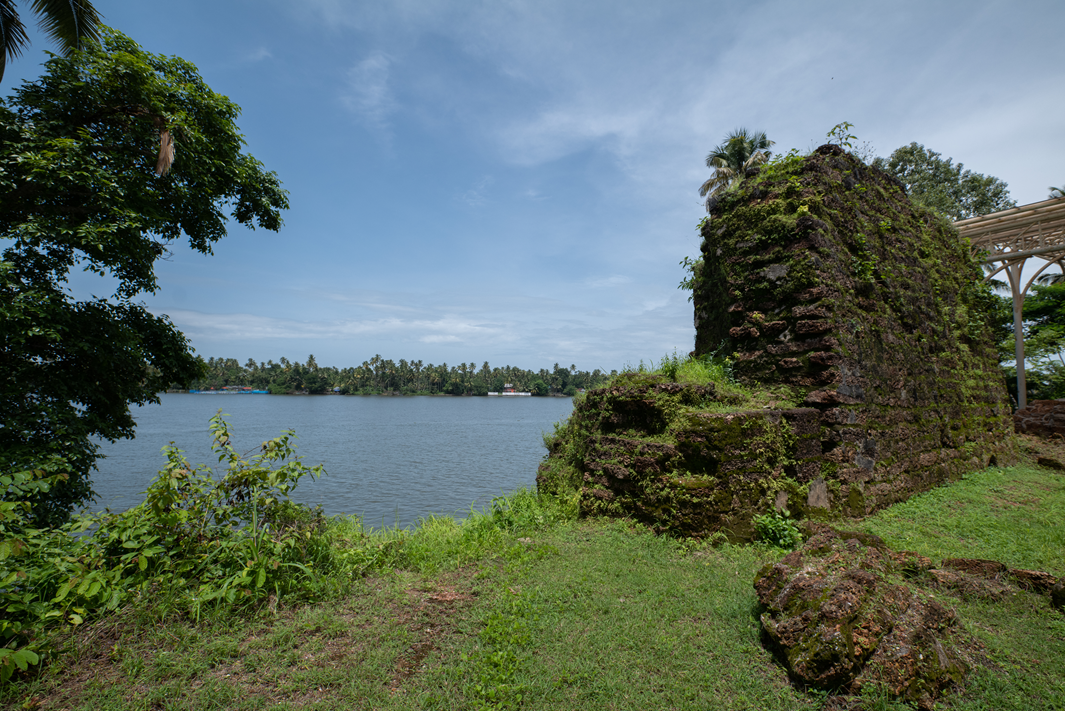
Kottappuram Fort is an ancient stone Fort built by the Portuguese in 1523 CE. The historical structure is being restored and developed as part of the Muziris Heritage Project.
The remains of a historic fort associated with the European trading powers that operated along this coast. It offers a glimpse of the strategic importance of the waterways and port settlements.
4. Thiruvanchikulam Mahadeva Temple
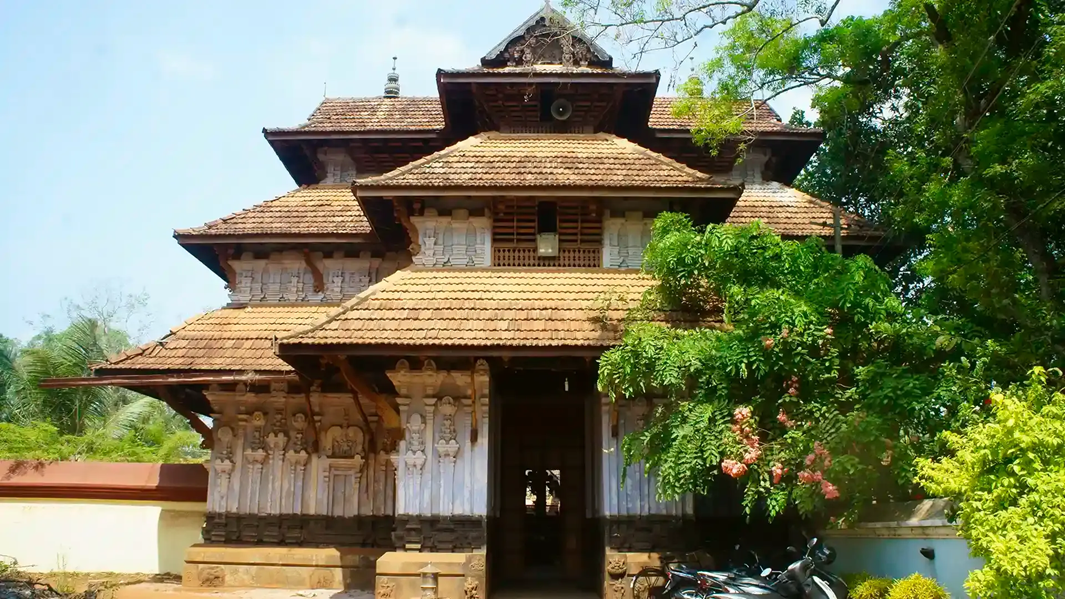
Thiruvanchikulam Mahadeva Temple, located at Kottapuram, 6 kms from Kodungallur, in Thrissur district, dates back to the 8th century. It was built during the rule of the Chera dynasty. The presiding deity Lord Mahadeva was the family deity of the Cochin royal family.
Built in the Kerala architectural style, the temple features a Namaskara Mandapam, a prayer hall with 16 pillars in front of the sanctum sanctorum. The temple has a good collection of mural paintings which depict many scenes from Hindu mythology. The temple is also known for its rituals. Palliyara Pooja performed by devotees for securing peaceful marital life and begetting children, attracts hundreds of people. These rites are performed on full moon nights, during evening time.
The annual festival of the temple takes place in the Malayalam month of Kumbham [February-March], when Shivarathri festival is celebrated with great pomp. Anayottam [elephant race] is conducted as part of the festival, and people throng to witness this celebration. Vaisakha Brahmotsavam is another prominent festival celebrated at the temple, and it usually falls in the Malayalam month of Midhunam [May-June].
5. Kottappuram Muziris Lakeshore Park, Waterfront and Amphitheatre in Kodungallur
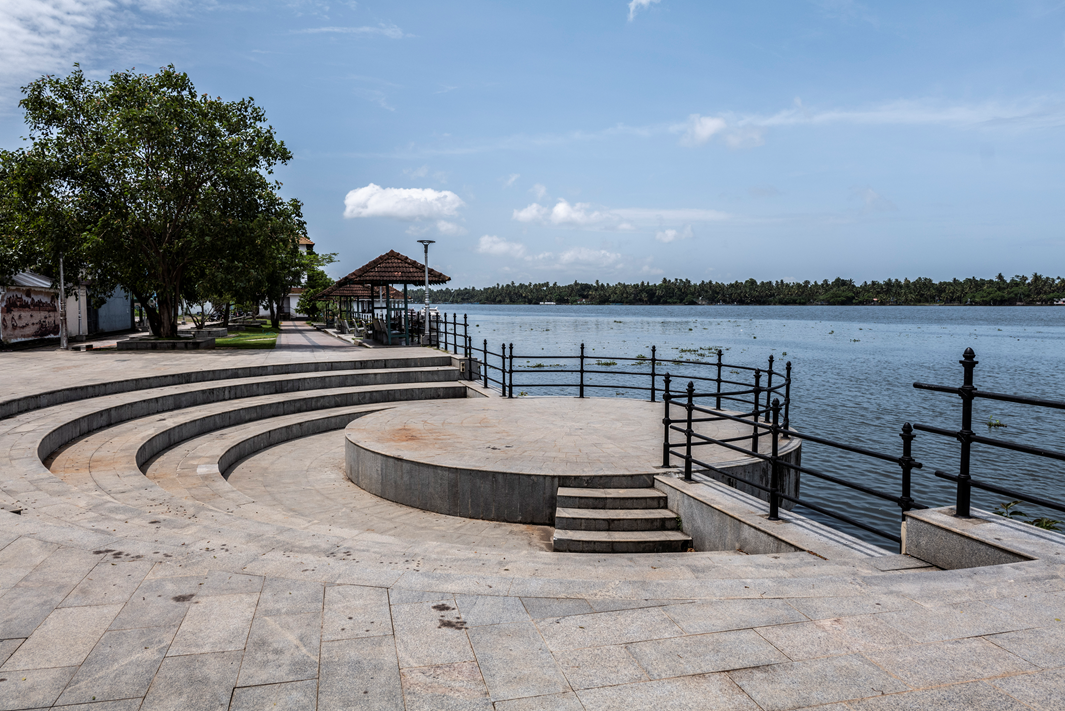
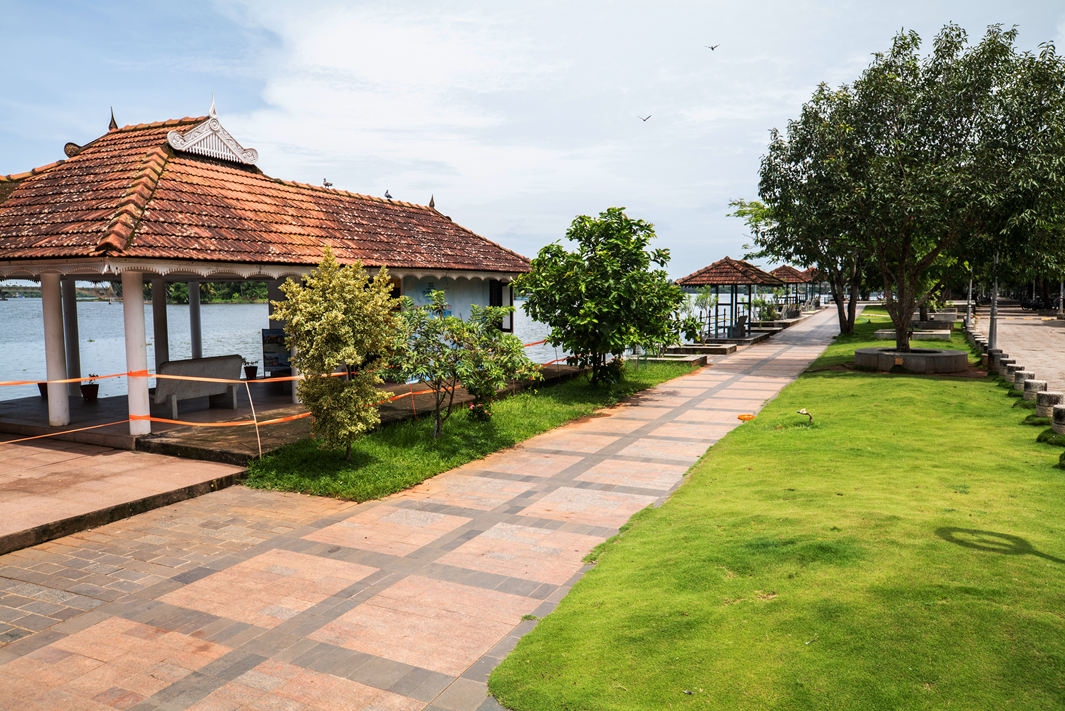
A pleasant waterfront place to unwind and enjoy views around the Kottappuram area. It can be combined with nearby heritage stops for an easy half-day outing.
The Kottappuram Waterfront that lies close to the Kottappuram Fort is a recreation zone with a walkway, waterfront seating, kiosks and restaurants
6. Marthoma Pontifical Shrine, Azhikode
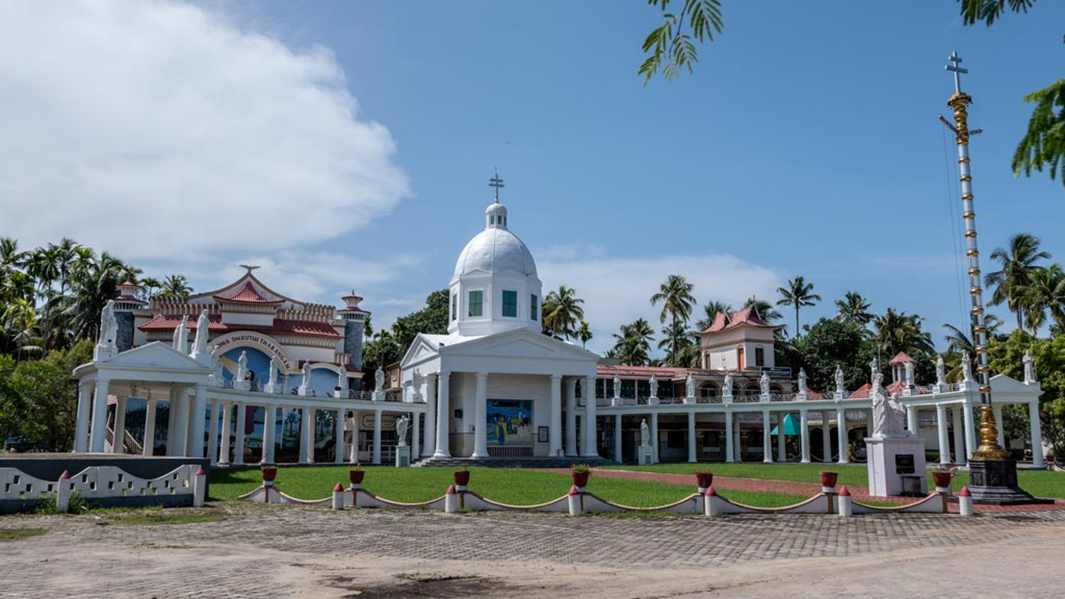
Marthoma Church, Azhikode also known as Marthoma Pontifical Shrine located 6 kms from Kodungallur, is a major pilgrim centre under the Muziris Heritage Project. St Thomas, the Apostle of Christ, arrived first in Kerala at Kodungallur on 21 November, 52 CE. Located on the banks of the Periyar, this coastal area had communities of Jews and Muslims. It is believed that St Thomas preached gospel here, baptised new believers of the locality, and established Christian communities. The Marthoma Church is believed to be the first of the seven churches St Thomas established in Kerala. In 72 CE, St Thomas was martyred at Mylapore and later his relic was taken to Edessa and then to Ortona in Italy.
Although there are no remains of the old city and church here, in 1954 CE a relic of the bone of St Thomas’s right arm was bought from Ortona, and kept in a beautiful shrine behind the altar of the church. This shrine is built in the model of St Peter’s Basilica in the Vatican, and attracts thousands of people irrespective of differences in religion, caste or creed.
The Marthoma Smrithi Tharangam (a Sanskrit word meaning “waves of memory about St Thomas”) offers a quick view of the mission of the Apostle. This 35-minute long audio-visual presentation depicts the life of St Thomas, his journey from Palestine, arrival at Cranganore or Kodungallur, his apostolic mission in India, death at Mylapore, and finally the bringing of the relic to Kodungallur.
7. Munakkal Beach at Azhikode, Thrissur
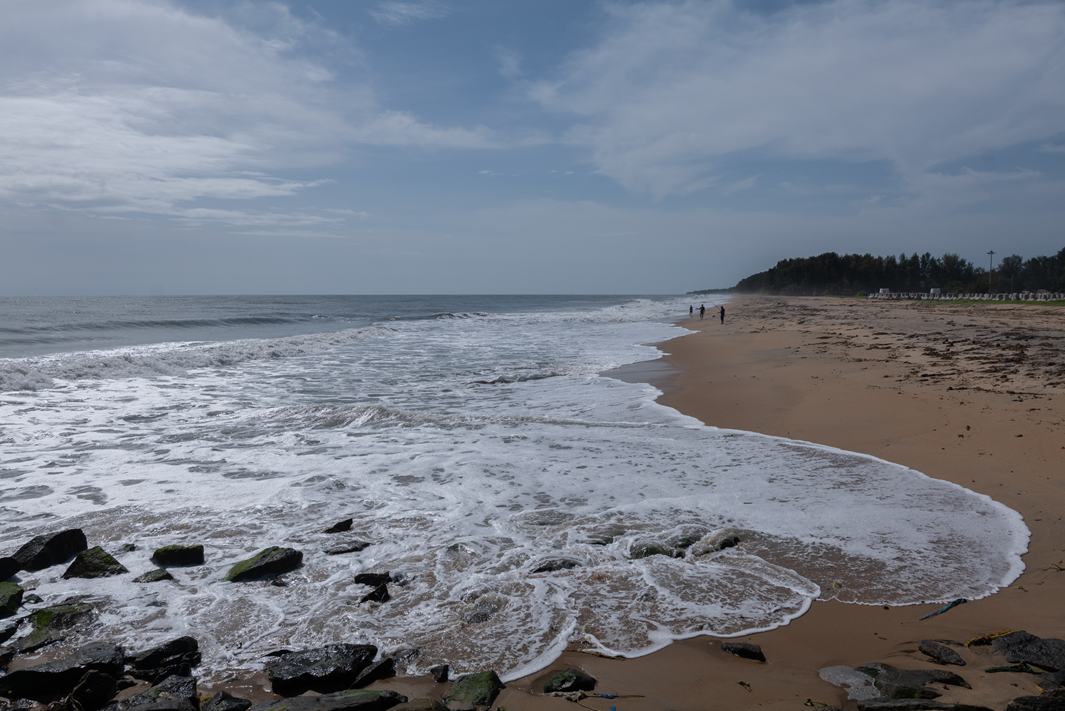
A coastal stop for sea views, fresh air and sunset colours. It is a good option for a quiet break after exploring the town’s historic sites. Munakkal Beach is the largest beach in Thrissur district located at Azhikode, on the coast of Arabian Sea
8. Cheraman Parambu
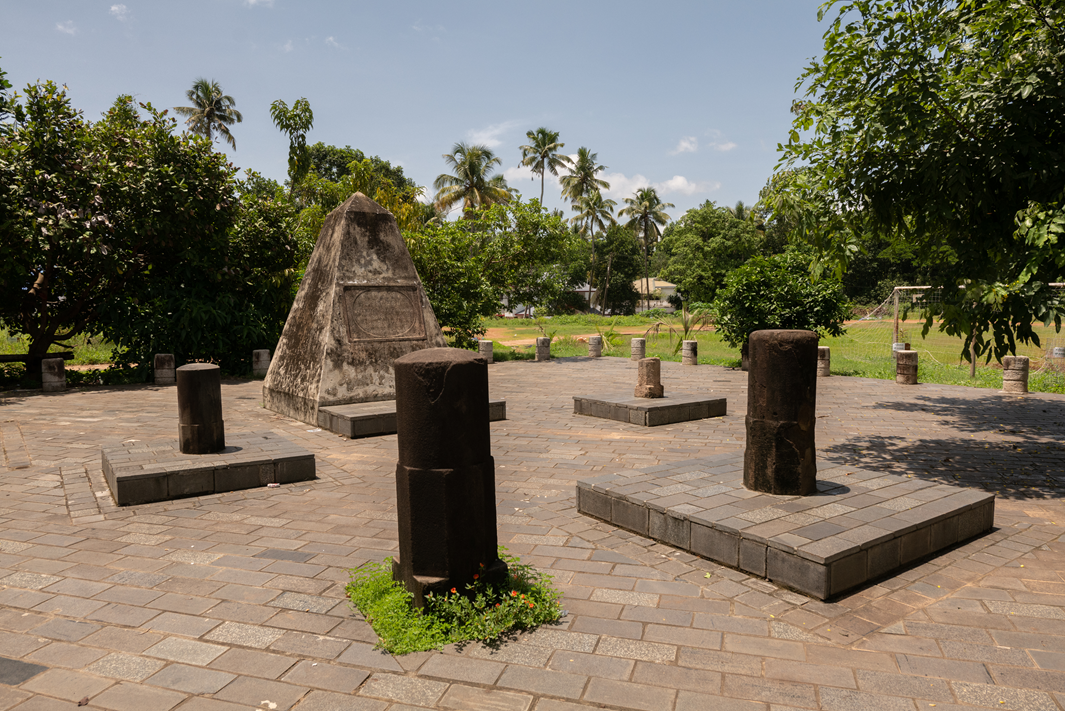
A heritage site in the Kottappuram area associated with stories of the Chera period and the region’s historic past. It can be paired with nearby Muziris attractions. Cheraman Parambu used to be the administrative headquarters of Chera rulers. It is now declared as a protected monument by the Department of Archaeology, Government of Kerala with many artefacts and historical evidences been unearthed from here.
9. Keezhthali Siva Temple
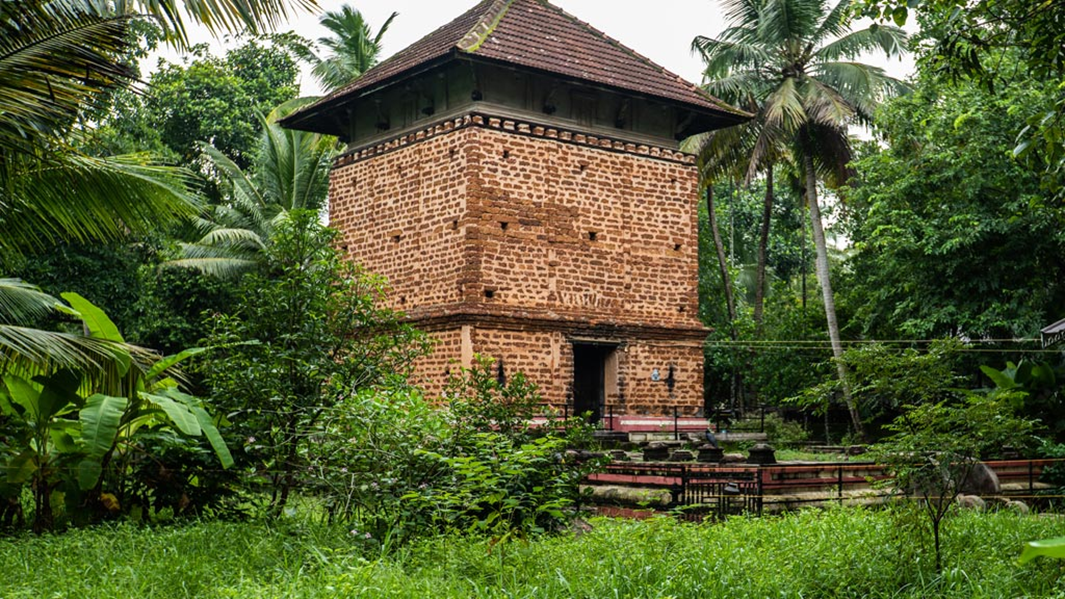
Keezhthali Siva Temple is an ancient temple believed to be constructed during the reign of Perumal Kingdom. It is one among the eighteen Thali temples dedicated to Lord Siva in Kerala.